
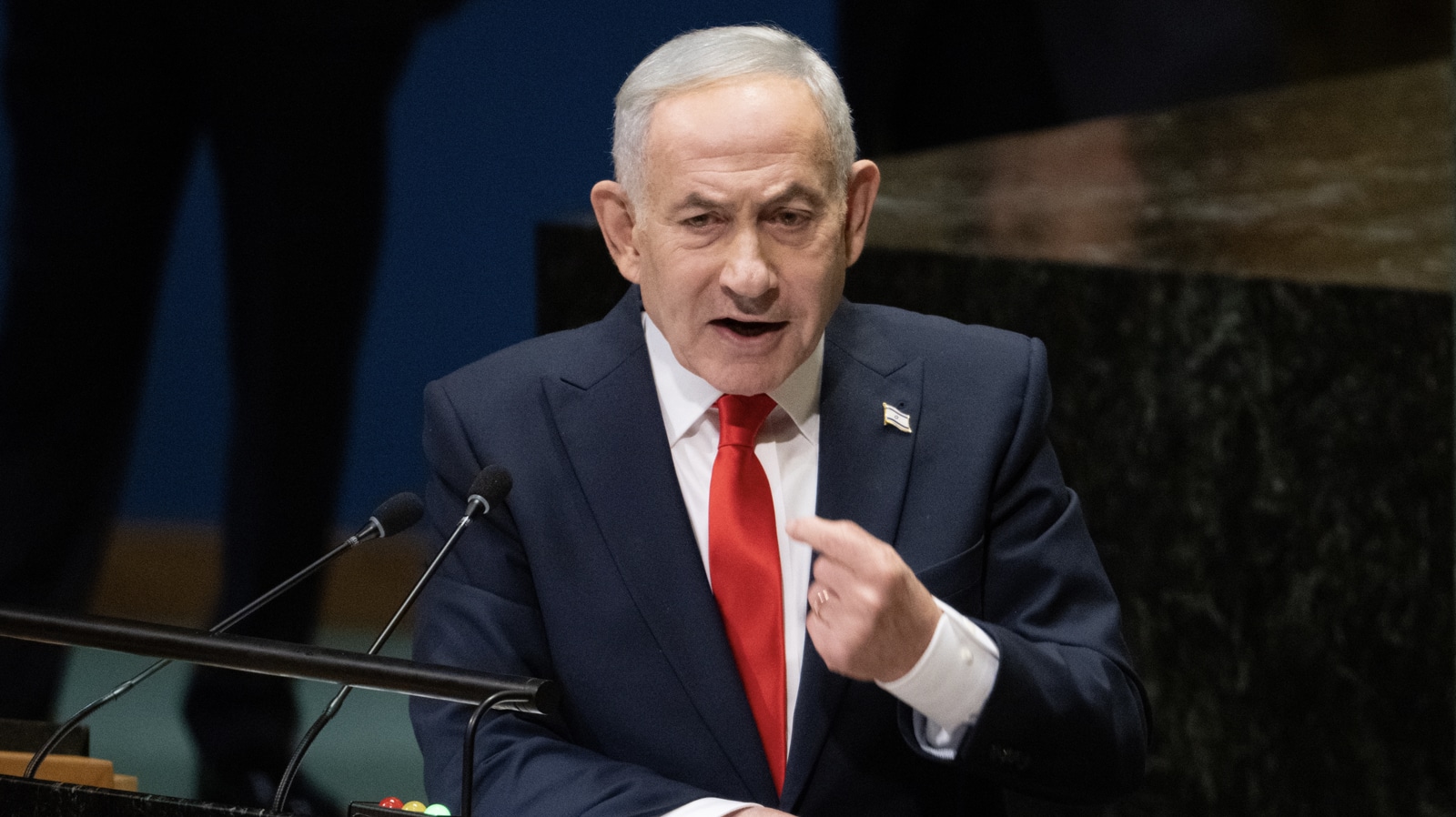
The national security document presented by Prime Minister Benjamin Netanyahu October 18 breaks new ground, tacitly acknowledging that Israel has long operated without a systematic definition of its grand strategy. Even David Ben-Gurion’s October 1953 cabinet remarks, consequential as they proved, did not constitute an official national security doctrine. Questions and objections have already arisen over the timing, on the eve of elections, and its presentation as the prime minister’s document rather than the government’s or the political-security cabinet’s. The published text is also only a brief outline of much more extensive work by the National Security Council (NSC), with help from others, including JISS researchers. Nevertheless, this is an important and unprecedented step that sketches out broad directions for action over the long term.
Several of the document’s main messages mark a real change. They include:
- A declared readiness to prevent the acquisition of nuclear weapons by Israel’s enemies, continuing the Begin Doctrine.
- An emphasis on the value of victory.
- A shift in security policy from containment (and deterrence) to preventive action, and from preparations based upon the intentions of enemies—or even today’s peace partners—to preparing to match their capabilities. This has implications both for force buildup (a larger defense budget), and for intelligence and military vigilance.
- Buffer zones—already established in Gaza, Syria, and Lebanon—as part of the defensive component of the national security doctrine, alongside a stronger home front.
- A national strategy focused on securing technological superiority and mastering rapidly changing frontiers of knowledge, linked to the previously announced aspiration to reduce dependence on U.S. financial aid.
- Israel’s regional alliances as a pillar of its national security doctrine. The map presented along with the document stretches from the United Arab Emirates to Morocco and from Somaliland to Azerbaijan, with Cyprus and Greece in the Mediterranean.
- The battle to shape perceptions, including the struggle against hatred in Western countries, as a distinct front in the wider campaign.
- The first discussion of its kind of the internal governance problems that have intensified in recent years, specifically the quantities of illegal weapons that could readily become a national security problem.
The document and its accompanying map also chart the threats Israel faces, emphasizing the possibility that hostile axes rooted in different strands of totalitarian Islamism could converge. Yet the map of this “convergence of axes” has serious problems. Foremost are the (absurd) inclusion of Egypt and Saudi Arabia in the Muslim Brotherhood axis, and the depiction of minority regions, such as the Druze areas in Syria, as separate political entities—a subject better left unspoken. The document also says nothing about the past year’s diplomatic developments: the Trump plan and UN Security Council Resolution 2803 on Gaza; the dialogue with Lebanon: and its government’s position; or the channels of contact with Syria.
The document furthermore leaves much unclear it terms of national objectives, beyond its affirmation of Israel’s existence as the nation-state of the Jewish people, preserving their heritage under democratic government; encouragement of Jewish immigration; and invoking settlement of the land as an expression of the national spirit. It fails to systematically explain how Israel will find the substantial manpower and economic resources it will need over the coming decades. It does not address priorities for force buildup and says nothing about naval power or the security of trade routes. The document should therefore serve as the starting point for a wider debate following the elections, leading to a more detailed national policy document that the cabinet formally adopts.
The Prime Minister’s Unprecedented Document
For decades, many countries, including the United States, have periodically published foundational documents defining their grand strategy and national security doctrine. U.S. presidents are legally required to submit a document to Congress. In Israel, however, despite intense and constant attention to strategic questions, an official national security document has never been submitted. Ben-Gurion’s October 1953 presentation to the cabinet, based on his “second seminar,” in which he fundamentally reassessed Israel’s security needs, did not constitute a formal statement of national security doctrine. Nor did the 18-point security program with which he concluded his review. Both remained classified for decades, and the triad subsequently attributed to them—deterrence, early warning, and decisive defeat of the enemy—was not formulated in those terms at the time but was inferred retrospectively.
Israel’s longstanding reluctance to adopt a binding national security doctrine reflects several fundamental features of its strategic and political environment: constantly changing security circumstances; a preference for creative improvisation in emergencies over formal doctrine—which has repeatedly proved its worth; and political divisions that complicate agreement on national objectives, as the current document also demonstrates. This reluctance concerned national policy, as distinct from the “IDF Doctrine” developed in the previous decade and the NSC’s multiyear assessments.
As the document acknowledges, the nature of the war Israel has been fighting since October 7, 2023, has forced Israel to reconsider this approach. The country’s political leaders have consequently had to draw up a methodical map of the threats it faces and redefine its response as a policy directive meant to guide the various branches of the defense establishment and other relevant government bodies, including the foreign, finance, and internal security ministries, and even the education ministry (in order to sustain Israel’s technological and information superiority). What has been published, however, is a very brief outline of the staff work carried out by the National Security Council (NSC), with assistance from outside professionals, including researchers at the Jerusalem Institute for Strategy and Security.
Political and public debate has predictably questioned why the document was presented a little more than a week before the Knesset elections. Critics have also objected that it appeared under the prime minister’s name alone, implying that neither the government nor the ministerial committee on national security affairs—the security cabinet—had approved it. Some of its content warrants criticism, as does the problematic “map of axes” presented alongside it. Even so, setting out concise principles to organize a new national security doctrine is a major step forward. It also makes possible an open, critical discussion (qualities the document itself commends) that should culminate in a more comprehensive document to be approved by the security cabinet.
Threats and Alliances at the Strategic Level
The risk that hostile “axes” could converge is central to the document’s assessment of strategic threats. The written text refers to a “Shiite and Muslim Brotherhood axis,” but the accompanying map makes clear that these are two separate axes and implies that there is a risk that may converge as a result of their shared, profound hostility to Israel’s very existence embedded in a totalitarian Islamist worldview. Hamas, although not explicitly mentioned here, offers a clear example of such convergence: it is an integral part of the Muslim Brotherhood, yet has also relied on support from the Shiite Iranian regime.
Iran is the only country named in the document itself. The map that accompanies the document, however, depicts two main camps that pose a threat (some of these depictions are problematic), along with a third camp that Israel regards as allies:
The Iranian-Shiite axis or camp, which according to the map includes Iran itself; Houthi-held areas of Yemen; the remaining Hezbollah strongholds in southern Lebanon; the remaining areas under Hamas control in Gaza (these could more accurately be described, as noted, as Muslim Brotherhood areas working with, not for, Iran); and parts of Iraq under the influence of pro-Iranian Shiite militias.
The “Diamond Alliance” whose four vertices according to the map are Turkey, Pakistan, Saudi Arabia, and Egypt: other parties shown as linked to it include Qatar, Bahrain (?), Syria, Jordan, the part of Sudan outside the control of the Rapid Support Forces (RSF), western Libya, and the Palestinian Authority. This is a highly problematic depiction, particularly as an illustration of the text’s “Muslim Brotherhood axis.” Including the western and eastern borders among the threats is more in the realm of potential dangers rather than representing actual developments. Egypt has in fact taken care not to join the “Mecca Alliance” and certainly does not belong ideologically to the Muslim Brotherhood camp. Abdel Fattah el-Sisi’s regime massacred Brotherhood members in August 2013 and still regards them as an existential threat, even though its relations with Turkey under Recep Tayyip Erdogan have warmed in recent years. Bahrain remains an Abraham Accords partner despite domestic pressure. Jordan remains a peace partner, and a partner in certain operations to thwart the Iranian threat, despite public hostility to Israel. Qatar, by contrast, appears as a secondary actor on the threat map, although it is more closely identified than any other country with Erdogan’s track and his hostility to Israel, and is the fountainhead of regional and global anti-Israeli incitement. The document’s wording is not itself problematic, but the accompanying visual depictions require reconsideration. This is especially true while efforts are underway, as President Donald Trump has stated publicly, to bring the Saudis back toward normalization with Israel and help them in Yemen.
The third camp is the “Hexagon Alliance.” Its pillars are Israel and the United Arab Emirates, but its depiction raises a different problem. The map shows external partners whose commitments are partial: India, Azerbaijan, Greece, Cyprus, Somaliland—which Israel recognizes as a state—and Ethiopia, as well as Morocco, which lies outside the map displayed. It also shows partners that control only parts of countries: the RSF in western Sudan; Khalifa Haftar in eastern Libya (who shortly afterwards turned tail and ratified a problematic EEZ delineation agreement with Turkey); what was formerly called the Southern Transitional Council in Yemen, backed by the UAE; and the Druze in southern Syria. Even if some of these assessments are well founded, accepted practice—the norm of non-intervention—calls for keeping them within confidential discussions. Public declarations could appear to validate enemy claims that Israel is actively seeking to break up the region’s states and encourage separatist forces.
Still, with these reservations, it is worth noting that by emphasizing alliances, the document gives diplomatic and strategic substance to its description of Israel as a regional power. The implication is that Israel should—and can—turn the impressive achievements of its military campaign over the past three years into diplomatic gains and strong regional ties with partners that share its assessment of the regional threat map.
While the document emphasizes the regional diplomatic element of Israel’s grand strategy, it also warns of growing isolation internationally as a result of delegitimization efforts in the West and the loss of traditional friendships. It does not name the United States (ties with the Americans feature prominently in the IDF Doctrine) but its discussion of armaments independence, as addressed below, nevertheless hints at the prime minister’s publicly stated goal of gradually giving up Foreign Military Financing (FMF). A possible change in the U.S. commitment to preserve Israel’s Qualitative Military Edge (QME) naturally sharpens the question of how to maintain Israeli technological superiority. The document offers an initial outline of that discussion.
The Technological Aspects of Responses to the Threat Map
Technology consequently features prominently in both the threats and the responses the document lists. It recognizes how rapidly the technological foundations are changing—in areas such as a presence in space, artificial intelligence, and quantum computing—and how those changes produce new weapons. Drones rank particularly high among the threats. Their impact became clear first in Ukraine, and they quickly spread to the fronts on which Israel is fighting. Their high ranking on the threat list reflects, among other things, their potential effects on perceptions and on public resilience, more than the actual damage and loss they have inflicted so far.
Following on from the prime minister’s earlier description of a “Super Sparta,” the document makes establishing and sustaining technological superiority an explicit goal and a principal means of securing Israel’s place in the region, The hunt for technological superiority includes continually tracking trends and shifts in advanced weaponry, a task that could also redefine the intelligence community’s role. It is also why the document calls for a substantial increase in the defense budget. Yet it does not address, at least directly, the essential social foundation for this goal: a high-quality education system that will train the next generation of innovation leaders in the defense establishment and industry.
The document gives considerable weight to remotely operated, unmanned combat systems, both explicitly as a threat and implicitly as a response. These systems include military vehicles and unmanned aircraft; autonomous vessels, though unmentioned, also belong in this category. Following the air force’s successes, the IDF’s ground forces are already applying this approach to a certain extent. The need for these systems will only grow, in part because of the personnel shortages the IDF faces for the foreseeable future.
The document treats technology—specifically Artificial Intelligence—as having a role to play in the struggle to shape perceptions, which it sees as a critical battlefield in its own right. This applies both to outright enemy states such as Iran, where there are ways to foment unrest, and to the campaign for Western public opinion and against the clearly anti-Zionist and even antisemitic trends that have taken hold across broad sections of the left and right.
The Use of Force
The document’s language on force buildup and use seeks to break with ideas that took hold before October 7. It goes further by reformulating the fundamentals of the national security doctrine: deterrence, early warning, and decisive defeat of the enemy, the original triad dating from the 1950s onward, and defense, which gradually became a fourth pillar in recent decades.
The document makes prevention a fundamental reason for employing force. Above all, this concerns preventing enemy states—today, Iran—from acquiring nuclear weapons, but it also has a wider application. It means being prepared to use force, if necessary, to stop a dangerous military buildup or prevent new threats from emerging on Israel’s borders or beyond the horizon.
This principle, and Operations Rising Lion and Roaring Lion, can be seen as echoing Ben-Gurion’s decision to launch a preventive war in 1956. He did so with help from France and Britain, allies whose shared interest in confronting Gamal Abdel Nasser’s regime in Egypt was temporary. The principle goes beyond a preemptive strike against an enemy at the gates, as in the Six-Day War: it entails a determination to prevent the enemy from building up its force.
The document therefore departs from earlier understanding of how intelligence should guide force buildup and employment. Ben-Gurion believed that Israel’s limited resources could not sustain permanent, full war readiness against an enemy with far greater capabilities. Early warning of intentions would instead allow Israel to mobilize reserves in time, defeat the enemy decisively and quickly, and return to normal life. The new document, however, explicitly rejects reliance, in force buildup and constant readiness for war, “on the intentions of enemies and friends [again, a hint at the peace partners on the western and eastern borders?], which can change in the blink of an eye.”
The implications are clear: preparing for capabilities means keeping a large force of regulars and reservists continuously mobilized against the accumulated military capabilities of the Arab camp, even though, for example, Syria’s military capabilities have been greatly eroded, and Hezbollah and Hamas are no longer as strong as they were. The document rightly concludes that the defense budget must increase. Yet it does not explore the economic and social implications of living as a “Super Sparta” over the long term. Nor does it examine the diplomatic and strategic implications, including the heightened “security dilemma” for Israel’s neighbors.
Deterrence is presented as an organizing principle, now grounded in the ability to deliver large-scale precision fire, including disruption of civilian systems, as demonstrated against the Houthis in earlier rounds. Communicating this to enemies and potential enemies remains an important objective in its own right. But even if temporary deterrence has been achieved, the document warns against unfounded assumptions of calm and accommodation that could lead to a slackening of the sustained military effort. That warning reflects the lessons of October 7.
Early warning also remains necessary, at least as long as enemy capabilities have not been neutralized. A “continuous and effective” intelligence picture is therefore needed to prevent surprises but not as a substitute for constant readiness for war.
The document entirely omits “decisive defeat of the enemy,” a term whose meaning was ambiguous from the outset. Instead, it speaks of “victory”: “breaking the enemy’s power and its belief in its ability to pose a real threat.” It also calls for “initiative and cunning,” making full use of the indirect approach in the spirit of thinkers from Sun Tzu to Liddell Hart.
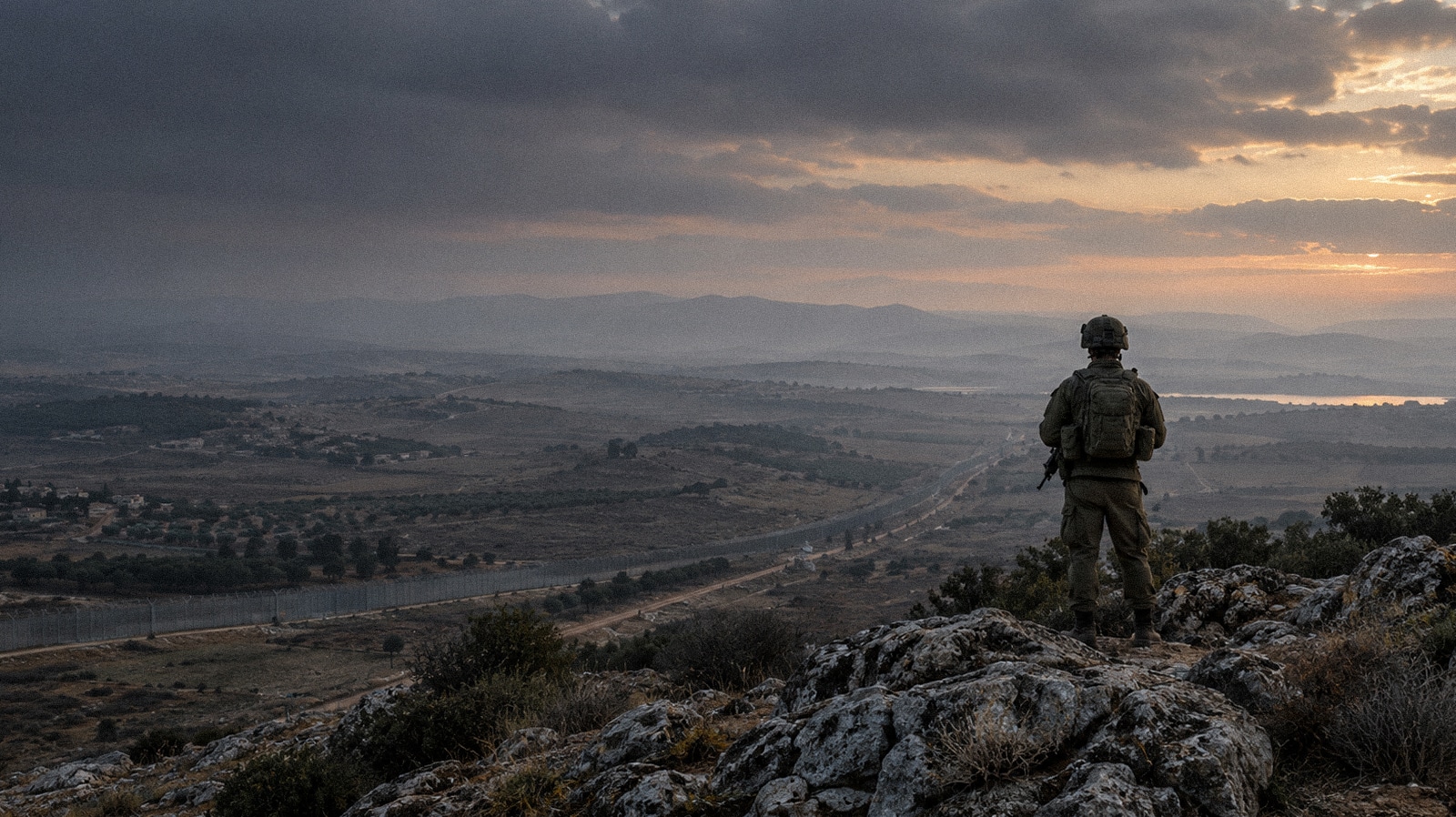
Finally, the document addresses defense. In the wake of October 7, it calls for building the capacity to thwart an invasion, in part by strengthening home-front defenses, and for establishing buffer zones, as Israel has already done in Gaza, Syria, and Lebanon. It also includes technological defense of the home front—both existing and under development—against invasion and against the rapidly expanding drone threat.
Resilience and Governance
When Ben-Gurion addressed the cabinet in 1953, he spent considerable time on resilience and social structure, even examining the backgrounds of IDF officers. His concern for the staying power of the new frontier communities was evident. It helped explain his opposition to a policy of “defense” and his preference for building the capacity to carry the fighting into enemy territory and defeat the enemy decisively and rapidly. The current document credits the home front with standing firm during the war. In its view, buffer zones should relieve the distress of frontier areas that led to unprecedented large-scale evacuations during the fighting. It does not address reconstruction, especially in the north, as a matter of national security.
The document includes among the threats it lists the substantial stocks of weapons—and even drones—held by criminal groups, specifically organized crime in the Arab sector, which could become a national security problem, although it does not discuss how to respond. In doing so, the document acknowledges that failures of governance have strategic consequences. Illegal weapons are only one such failure; others, too, now weigh on social cohesion, the functioning of government, and daily life in Israel.
Conclusion: What Does the Document Signal, What Is Missing, and What Must Happen After the Elections?
The drafting and presentation of the document is an important step toward a more systematic, comprehensive national security doctrine, despite its politically charged timing and the fact that it was presented as the prime minister’s personal position. At the same time, it remains an outline that needs to be developed in detail and several key issues are absent from the document:
- The “dynamic relationship between goals and resources” (a common definition of grand strategy) in the context of addressing the manpower and economic capacity on which Israel’s force buildup will rely, particularly if it gives up U.S. Foreign Military Financing (FMF).
- Priorities in force buildup among the IDF’s branches, and the role of the defense industries and their export capabilities.
- Suggestions as to practical policy to address the threat identified in the document from illegal weapons within Israel and extend that policy to other failures of governance that undermine both social cohesion and Israel’s standing in the world.
- Attention must also be paid to the political and security implications of developments in Israel’s immediate neighborhood over the past year: the “Trump plan” for Gaza’s future led to UN Security Council Resolution 2803 and a multilayered mechanism to implement it, which has so far proved ineffectual; dialogue with the Lebanese government concerning its formally declared, forceful stance toward Hezbollah, alongside the difficulties of putting that stance into practice on the ground; channels of contact with Syria concern both the Jabal al-Druze area and broader security arrangements, under the shadow of Turkey’s problematic role and the U.S. backing for this role.
- Other questions that the document does not address, some of which have been mentioned in this paper, including the maritime arena and the security of Israel’s trade routes.
Israel’s next government will therefore have to develop this document into a broader, comprehensive, and more detailed directive for strategic policy. That will require systematic staff work, followed by formal approval from the government or the ministerial committee on national security affairs.
Source: https://jiss.org.il/en/lerman-the-prime-ministers-national-security-document/