

Introduction
In the late 1990s, historian Francis Fukuyama declared the “end of history”—the final triumph of liberal democracy, the global economy, and perpetual peace. No region embraced this outlook more fully than Europe. Having emerged from two world wars and a Cold War, Europe built a welfare model on the ruins of a violent past. The peace dividend was clear: defense budgets fell sharply and resources were redirected to expansive social programs—health care, education, pensions, and social infrastructure. The United States, through NATO, provided strategic protection. Europe could afford to position itself as a “continent of peace” in a world where threats seemed distant.
At the same time, however, Europe began to experience a demographic shift marked by a sustained decline in birthrates and an aging population. To address the resulting labor shortages, Europe turned to unregulated immigration, with the vast majority of migrants coming from Muslim populations in North Africa and the Middle East. These flows accelerated further in the second decade of the 21st century, driven by economic conditions in Africa and waves of refugees from conflicts such as the Syrian civil war.
Russia’s invasion of Ukraine in 2022 caught Europe unprepared and with insufficient military power. The abolition of conscription, reductions in force levels, severe shortages of ammunition, outdated technologies, and inadequate logistics left the continent militarily irrelevant. Countries such as Germany, France, and the United Kingdom, which had long spoken of “strategic autonomy,” discovered that they could not provide even a fraction of what modern warfare requires.
The peace dividend, once a domestic political asset, became a strategic liability. Europe, which had envisioned the “end of history,” found itself once again at the center of events—this time as a weak bystander.
This article examines Europe’s decline through an analysis of the continent’s demographic shifts, its economic and security challenges, and the current crisis in its relations with the United States in the context of the war in Iran, including NATO’s role in the fighting alongside its ally and principal sponsor—the United States.
Demography and the Loss of Relevance
Europe, the cradle of the Industrial Revolution, scientific innovation, and colonial power, is gradually becoming the “largest museum in the world”—a continent rich in history, architecture, and culture, but weak in manpower, innovation, and its ability to meet the challenges of the 21st century. Demography is the continent’s most silent and consequential threat.
The data is unequivocal: the total fertility rate in the European Union fell to a historic low of 1.34 children per woman in 2024 (down from 1.38 in 2023), the lowest level since measurements began in 2001.[1] In Germany, the fertility rate stands at 1.35, corresponding to a decline of about 100,000 people in 2025.[2] Europe’s population is expected to peak at roughly 453 million in 2026 and then begin a gradual decline. By 2050, it is projected to fall by about 5 percent (to roughly 428 million), with even steeper declines in more pessimistic scenarios. Without immigration, Europe’s population could shrink by 9 percent or more by 2100.[3]
The most dramatic shift is in the age of the population: about 21.6 percent of the population is currently over age 65, a figure expected to approach 30 percent by 2050. The number of people over 85 is projected to double. The old-age dependency ratio (the number of dependents per 100 working-age individuals) is rising rapidly, while the ratio of working-age population (ages 20–64) to elderly is expected to decline from 2.7:1 today to about 2.2:1 in the coming decades. The economic implications are severe: the workforce is shrinking by 1 to 2 million workers annually, creating acute labor shortages in industry, health care, education, and technology.[4] Productivity is declining, pressure on pension and health systems is increasing, and growth remains low (around 1 percent). Europe is losing its competitive edge to the United States and China, where there are more young people—even as China itself faces similar demographic challenges.[5]
Innovation is particularly affected by these trends. Europe produces high-quality talent, including more AI talent per capita than the United States, but much of it is lost to other regions. Engineers, scientists, and young entrepreneurs relocate to the United States, Canada, and Australia, where salaries are three to five times higher, venture capital is more available, and regulation is lighter. Between 2010 and 2020, roughly 500,000 European professionals moved to the United States alone.[6] Leading institutions such as ETH Zurich, Imperial College London, and the École Polytechnique in France continue to train top graduates, many of whom then move to the Silicon Valley. The result is an aging talent base and less breakthrough innovation, with the United States and China coming out on top in the race for the next generation of talent.[7]
Immigration was initially intended to ease demographic pressures but has become a source of explosive social tensions. Aging and shrinking native populations feel increasingly threatened by immigration, while segments of the Muslim immigrant population, some of whom make no effort to integrate, create “pockets” of crime, and, in some cases, terrorism. Social cohesion, which underpins the European welfare model, is collapsing. Rather than resolving demographic decline and labor shortages, immigration has become a security and cultural challenge. Frictions are growing with Muslim communities numbering in the millions in France, Germany, Sweden, the Netherlands, and the United Kingdom.
Moreover, the combination of an aging population, a shrinking workforce, and declining innovation is eroding Europe’s relevance. It struggles to compete with the United States, which attracts talent, and with China, which produces large numbers of science and engineering PhDs. Industry faces persistent labor shortages, accelerating deindustrialization as firms relocate in response to high energy costs and limited manpower.
Pressure on welfare systems is increasing as pension obligations, health care, and elderly care require growing resources, limiting investment in security, innovation, and infrastructure. Europe, once a global leader, is becoming a secondary actor, dependent on the United States for defense, on China for trade, and on external suppliers for energy.
Europe needs a young and dynamic workforce to meet geopolitical challenges yet instead faces rising internal tensions. Without a change in direction, the continent will continue on the path to becoming a museum—rich in memory but lacking a future. While this is a long-term trend, there is at present no sign of anything being done to reverse it; in fact, conditions are worsening, as outlined above. A society focused on material well-being and the “here and now” does not encourage higher birthrates or investment in the next generation. Continuity and future generations are not the top priority of societies led by childless leaders such as Angel Merkel in Germany and Emmanuel Macron in France.
The Economic Trap — “An Impoverished Europe”
Europe’s decline is not limited to demographic pressures or military and geopolitical weakness. It is also deeply rooted in a structural economic trap. High public debt, a growing tension between expansive welfare commitments and national security requirements and accelerating deindustrialization have left the continent without a solid industrial base. After decades of benefiting from the peace dividend, Europe now finds itself facing empty public coffers, social fragmentation, and a shrinking industrial sector.[8]
Public debt figures in Europe at the end of 2025 and early 2026 are indicative. The debt-to-GDP ratio of the euro zone stood at roughly 88 percent in the third quarter of 2025, with dramatic disparities across the zone’s member countries. Greece leads at around 150 percent, Italy’s debt stands at around 137–138 percent, France at 116–118 percent, and Spain above 103 percent; Germany’s debt is much lower (62 percent). Total public debt across the European Union exceeded €15 trillion by the end of 2025, up significantly from €13.9 trillion in 2023. In the past, economic growth allowed European governments to carry high debt levels, however the continent now lacks a meaningful growth engine to support expanding security requirements.[9]
Growth projections underscore the severity of the problem. The European Union is expected to grow by only 1.4 percent in both 2025 and 2026, with even lower projections for the euro zone (1.2–1.3 percent).[10] This compares with stronger growth in the United States (around 2 percent or higher) and in China (4–5 percent). Europe faces persistent stagnation, driven by low productivity, heavy regulation, high energy costs, and demographic pressures. Without faster growth, increases in defense spending—which require trillions in additional resources—place direct strain on existing budgets.[11] Germany, long considered Europe’s economic engine, amended its constitution in 2025 to allow special borrowing for defense and infrastructure, but even that step falls short of closing the gap.
The war in Iran has aggravated these pressures. Energy prices have surged: gas prices in Europe have risen by more than 60 percent since the start of the conflict, while oil prices have climbed to $100 per barrel and higher. The result is renewed inflation, increased pressure on fiscal deficits, and growing difficulty in financing both welfare spending and defense procurement.
Europe’s expansive welfare model—covering health care, education, pensions, unemployment benefits, and social support—has broad political backing. Welfare spending accounts for a large share of national budgets, exceeding 40–50 percent in many European countries. As security demands rise, driven by the prolonged war in Ukraine and the growing threat from Russia, a central question emerges: can governments reduce welfare spending to fund higher defense requirements? Public opinion across Europe suggests not.
In Italy, where public debt is high and skepticism toward military spending is widespread, attempts to redirect funds from social programs to defense have triggered protests. France faces a similar dynamic, with large-scale demonstrations already taking place over a range of social issues. In the United Kingdom, the government’s plan to cut social benefits in order to raise defense spending to three percent has encountered strong opposition and is being reconsidered.
In Germany, the chancellor stated at the end of 2025 that the welfare state is no longer sustainable given the country’s economic capacity and called for an “autumn of reforms.” An aging population, rising health and pension costs, and pressure to increase defense spending—including through a dedicated fund—are generating internal strain. Surveys indicate that European publics still prioritize welfare over military spending, particularly in Western Europe. In parallel, the erosion of the middle class driven by inflation and rising housing and energy costs makes any further tax increases politically volatile.[12]
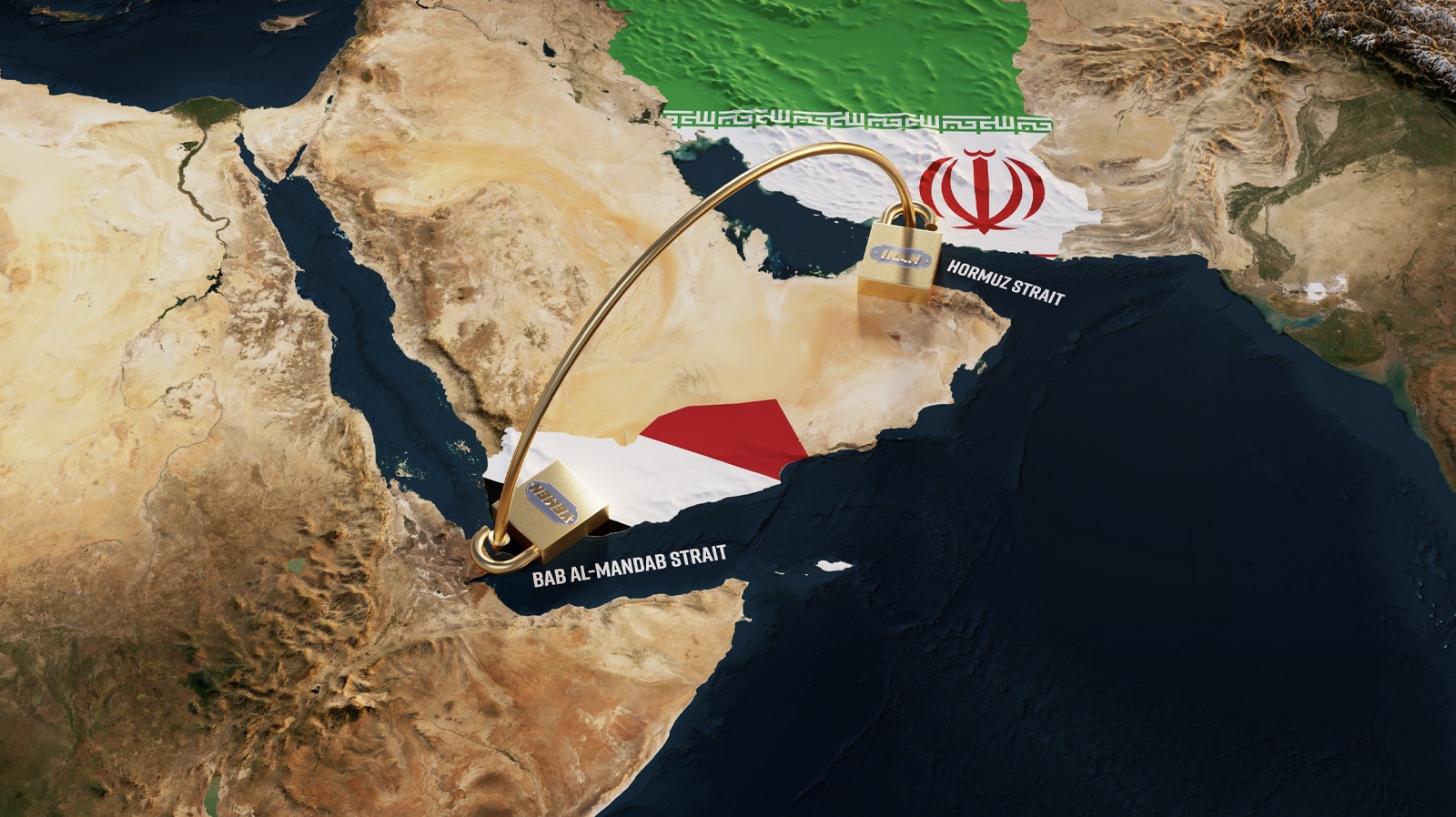
The most damaging blow comes from deindustrialization. High energy prices driven by tensions with Russia (2022) and the war in Iran (2026) are undermining Europe’s competitiveness. Germany, long considered the “engine” of Europe’s industrial base, has been hit particularly hard: industrial electricity prices are roughly twice those in the United States. Gas prices have surged, and the closure of the Strait of Hormuz, along with attacks on Gulf energy infrastructures (including in Qatar), have further deepened the crisis.
The consequences are already visible. More than 20 percent of German chemical companies are considering relocation or closure. Across Europe, hundreds of thousands of industrial jobs have been lost in recent years. Without a strong heavy industry—chemicals, steel, machinery, and automotive production—Europe lacks the capacity to independently produce weapons, ammunition, electronic components, and logistical systems. This erosion is particularly striking given that the European Union itself emerged from the European Coal and Steel Community after World War II.
Europe is in the midst of a vicious cycle: high energy costs push factories to relocate, leading to higher unemployment and lower tax revenues. This, in turn, makes it harder to finance both security and welfare. The war in Iran has tightened the European gas market further (reserves were already low) leading to further deindustrialization in several sectors. Europe is becoming impoverished not only financially, but also in its capacity to act. High debt limits fiscal flexibility, political pressure between welfare and defense needs constrains decision-making, and deindustrialization continues to erode its industrial base. Unlike in earlier periods such as after World War II or during the Cold War there is no European growth engine capable of funding recovery. Neither the United States nor China are likely to step in and rescue Europe.
The war in Iran is not the root cause but it is an accelerator of existing trends. It exposes the underlying weaknesses of the European model. The combination of expansive welfare, low-cost security under an American umbrella, and relatively accessible and affordable energy is no longer sustainable. Without painful reforms, including raising the retirement age, targeted reductions in welfare spending, substantial investment in industry and energy, and increased defense spending, the continent will continue to decline.
The Geopolitical Axis — The War in Iran as a Turning Point
The war in Iran is no longer just a regional conflict in the Middle East; it has become a global geopolitical turning point that has exposed Europe’s deep strategic weakness, even more starkly than Russia’s invasion of Ukraine. The old continent, long accustomed to viewing itself as a significant global actor, has quickly discovered that it is vulnerable, dependent, and unable to defend its vital energy, trade, and regional stability interests and is increasingly irrelevant in the global power game.
One of Europe’s most painful failures is its inability to protect critical maritime routes. The Strait of Hormuz, through which roughly 20 percent of global oil and a significant share of liquefied natural gas (LNG) flows, has become a central flashpoint. Europe, heavily dependent on energy imports, has had to absorb the impact, without the capacity—or willingness—to respond.
Europe is not capable of defending its economic interests without active American support. The United States and Israel struck Iran but Europe opposed the war, in some cases restricting the use of its airspace by U.S. aircraft involved in operations and declining to take meaningful action to address the crisis in the Strait of Hormuz. Moreover, France, alongside Russia and China, blocked a UN Security Council resolution proposed by Bahrain and the United Arab Emirates that would have authorized the use of force to reopen the strait closed by Iran. The French government opposed military action and instead pushed for a diplomatic solution.[13]
Tensions have emerged within the European Union. Eastern European states such as Poland and Hungary have pushed for a harder line on Iran and on immigration, while Western European states, including France and Germany, have sought to balance “solidarity” with concerns about domestic unrest. Beyond this internal divide, the war in Iran has also exposed a lack of European cohesion at the geopolitical level.
The war in Iran is not merely an external event; it serves as a mirror reflecting Europe’s underlying condition: a continent rich in history but limited in power, unified in rhetoric but divided in practice. It has also highlighted Europe’s complete dependence on the United States for its security.
The crisis in transatlantic relations is now threatening the cohesion of the NATO alliance. Europe’s limited support for the Iran war has tested U.S. patience after decades of what it sees as European “free riding” on American protection. Under President Trump, Washington has turned burden-sharing from a long-standing demand into a concrete ultimatum, particularly as it allocates increasing resources to the Indo-Pacific in response to China.
For years, European leaders spoke of “strategic autonomy,” yet in practice continued to rely on the United States. As of 2025, the United States still paid for roughly 60 percent of NATO’s total military spending, while Europe contributed a comparatively smaller share. After focusing on the issue during his first term, President Trump set out clear demands upon returning to the White House: he called for a sharp increase in defense spending by European NATO members but received only limited commitments from some governments. His demand was explicit—raise defense spending from around two percent or less to five percent of GDP over the coming decade. He warned that failure to meet this target could lead the United States to reconsider its role in the alliance and even raised the possibility of linking voting rights to compliance with spending goals. Faced with Trump’s demands, European states agreed at last June’s Hague summit to increase defense spending to 3.5 percent for direct military expenditures and an additional 1.5 percent for defense-related infrastructure over the next decade. In practice, however, after more than a month of fighting in Iran with minimal cooperation from NATO allies, it increasingly appears that Europe—and NATO in particular—has become a burden on the United States.
European governments rejected the U.S. request to join a coalition to secure the Strait of Hormuz and provide logistical support. Spain closed its airspace and bases to U.S. aircraft; Italy denied landing rights at bases in Sicily; France and Germany limited their involvement to diplomatic and defensive support and refused to take part in offensive operations. The United Kingdom initially announced that it would not allow the use of bases under its control for operations against Iran, though it later reversed that position under heavy U.S. pressure. There has also been no formal European commitment to support the U.S. war effort, as many governments do not consider the situation to justify invoking Article 5 of the NATO treaty. Given that the issue directly affects European interests, and that the United States has borne the primary burden of supporting Ukraine, Washington had reason to expect a more supportive European response. That expectation has not been met.
An alliance founded on the principle of mutual defense is drifting toward paralysis. NATO has struggled to form a unified position and has not acted to implement its charter commitments, even after assets belonging to member states were attacked by Iran—such as strikes on British bases in Cyprus, missile fire targeting NATO member Turkey, and attacks on U.S., French, and British bases in the Gulf. In practice, Europe’s dependence remains extensive. Efforts to act—whether securing maritime routes, supporting Ukraine, or tracking emerging threats—continue to rely on critical U.S. capabilities. Intelligence and satellite coverage, as well as key elements of air logistics such as aerial refueling and heavy transport, are almost completely dependent on the United States, and the same applies for advanced weapons systems. When London announced it would deploy a warship to defend its bases in Cyprus, it turned out that the Royal Navy did not have a single operational frigate available for immediate deployment.
The war in Iran has brought this reality into sharper focus. Europe has been unable to secure critical shipping lanes or generate high-quality intelligence without U.S. support. The political implications are clear: despite continued references to “autonomy,” European leaders depend on American assistance in every major crisis.
The drift between the United States and NATO is not temporary; it reflects a deeper strategic shift. For the past 75 years, Washington has underwritten Europe’s security. It now expects a more balanced distribution of the burden. The war in Iran has highlighted the gap between European rhetoric and military reality, as well as the growing divide between Eastern and Western Europe. This trend became more pronounced with President Trump’s return to office and the shift in U.S. policy toward support for Ukraine in the war with Russia. Under President Biden, the United States supplied Ukraine with hundreds of billions of dollars of weapons and ammunition without cost. By contrast, President Trump has sought payment through arrangements such as a minerals agreement and has pressed European governments to purchase from the United States arms and ammunition for Ukraine at full cost.
Implications for Israel
Europe’s gradual decline has direct implications for Israel across several domains. In the security sphere, Israel is already working to reduce its reliance on European partners. Boycotts encountered during the War of Redemption, along with bans imposed by some countries on the transfer of U.S. military aid through their airspace, underscore the need for Israel to reconsider its policies and supply chains. Israel has announced that it will no longer procure defense equipment from France and is moving to diversify its supply sources across other European states. Meanwhile, Israeli defense exports to Europe are likely to expand, particularly in the field of air defense. The recent delivery of the Arrow system to Germany, followed by additional purchase orders, as well as a major agreement with Greece for air defense systems, point in this direction. This trend offers Israel both economic benefits and increased political leverage.
In the energy domain, Israel, as a natural gas exporter, is positioned to benefit from supplying gas to Europe—particularly as transmission arrangements advance following agreements with Cyprus and Greece. Additional opportunities arise through exports to Egypt, where the gas can be liquefied and shipped onward to European markets. Economically, growing European demand for proven defense systems validated during the war in Iran offers continued upside for Israel’s industry and economy. These gains are likely to expand, alongside revenues from gas exports and Israel’s integration into a developing trade corridor linking India and Europe, in line with the joint vision advanced by President Trump and Prime Minister Netanyahu.
Diplomatically, Israel stands to benefit from the combined effect of these trends, which are likely to strengthen its position—particularly in Washington—while the influence of European states that have traditionally adopted strongly pro-Palestinian positions declines. The core stance of these European states is unlikely to shift significantly, in part because demographic changes are increasing the political weight of Muslim communities. That said, leadership changes in some countries could bring to power governments with a more favorable approach to Israel.
Even absent such shifts, the weakening of the continent, alongside Israel’s strengthening position, is likely to reduce Europe’s leverage over Jerusalem. Where European criticism and boycott threats once generated considerable pressure, their impact has diminished as these broader trends have intensified. Israel has a clear interest in avoiding further deterioration in relations with Europe. A substantial share of its trade, scientific cooperation, technology exchange, tourism, cultural ties, and even elements of its security cooperation remains linked to Europe. The hardening of European positions, reflected in the recognition of a Palestinian state by some European countries, harsh criticism of Israel, and in some cases constraints on bilateral ties, represents a problematic trend that could intensify in the immediate term amid ongoing U.S.-European tensions.
Conclusion
Europe’s decline is the result of a series of choices over recent decades: an addiction to peace; large-scale and often unregulated immigration, much of which has not integrated into local and in fact seeks to change its host societies; expansive welfare policies at the expense of security, accelerated deindustrialization, declining birthrates, aging populations, and persistent dependence on an American security umbrella. The war in Iran has exposed these dynamics in stark terms, accelerating existing trends and increasing their urgency. Europe now faces a decisive moment: it can pursue difficult reforms or continue its gradual decline into the position of a secondary actor—a “grand museum,” rich in history but limited in strategic power.
In and optimistic scenario, the war in Iran and sustained U.S. pressure will serve as a genuine wake-up call in which European governments recognize that the era of low-cost security under U.S. protection has come to an end. President Trump’s demand to raise defense spending to 3.5 percent—and potentially 5 percent—of GDP is intended to compel that adjustment. In a more pessimistic scenario, Europe will remain in a state of denial with reforms stalled by domestic politics and weak governments in Germany, France, the United Kingdom, and Italy refraining from reducing welfare spending or raising the retirement age for fear of public backlash and electoral losses. The likely outcome of this scenario is a continued erosion of Europe’s role as a global power.
This analysis has focused primarily on Western Europe and on the leading states within NATO and the European Union. It has not addressed the internal differences between Western and Eastern Europe or Europe’s complex relationship with the Russian threat; these issues warrant separate examination.
Israel can derive advantages from the evolving European landscape, which highlights its distinct value as a strategic partner for the United States across security, economic, and diplomatic dimensions. At the same time, risks remain, particularly if pro-Islamist forces gain influence in parts of Europe. It remains in the interest of both Europe and the wider free world that European states respond to this wake-up call and undertake the reforms required to restore their strength and standing.
The outcome will depend on how these trends evolve. In the meantime, Israel should continue to strengthen its capabilities and expand its networks of influence, partnerships, and trade wherever and as far as possible.
[1] Eurostat, https://ec.europa.eu/eurostat/web/products-eurostat-news/w/ddn-20260306-1.
[2] Ibid, https://www.destatis.de/EN/Press/2025/07/PE25_259_12.html.
[3] Ibid, https://ec.europa.eu/eurostat/statistics-explained/index.php?title=Population_projections_in_the_EU.
[4] Peter Bosch, Sophie Walravens, Navigating the Population Change in the EU: Possible Pathways to Demographic Resilience, Egmont – Royal Institute for International Relations, December 2, 2025.
[5] Jennifer Bouey, Michael S. Pollard, Agnes Xiangzhen Wang, Rakesh Pandey, China’s Aging Population and the Implications for China’s Security, RAND, March 12, 2026.
[6] Abdelakarim Benabdalla, “Europe Out of Service”: European Innovation Between China, the US, India, and the Arab World, MEDIUM, Dec 31, 2025.
[7] Matthew Lynn, Europe’s brain drain is accelerating. America can soak it up, The Washington Post, November 19, 2025.
[8] Elisabeth Krecké, Europe’s quiet stagflation risk, Gis reports online, March 18, 2026.
[9] Government debt at 88.5% of GDP in euro area, Eurostat, https://ec.europa.eu/eurostat/web/products-euro-indicators/w/2-22012026-ap.
[10] Autumn 2025 Economic Forecast shows continued growth despite challenging environment, European Commission, 17 November 2025.
[11] How serious is European public debt? Euranet Plus News Agency, February 5, 2026.
[12] Anchal Vohra, Europe’s Looming Guns vs. Butter Decision, Foreign Policy, March 4, 2025.
[13] The New York Times; Yonatan Lis, “China, Russia, and France Block UN Security Council Resolution to Open the Strait of Hormuz by Force,” Haaretz, April 3, 2026.
JISS Policy Papers are published through the generosity of the Greg Rosshandler Family.
Source: https://jiss.org.il/en/siboni-winner-the-decline-of-europe/