


Introduction
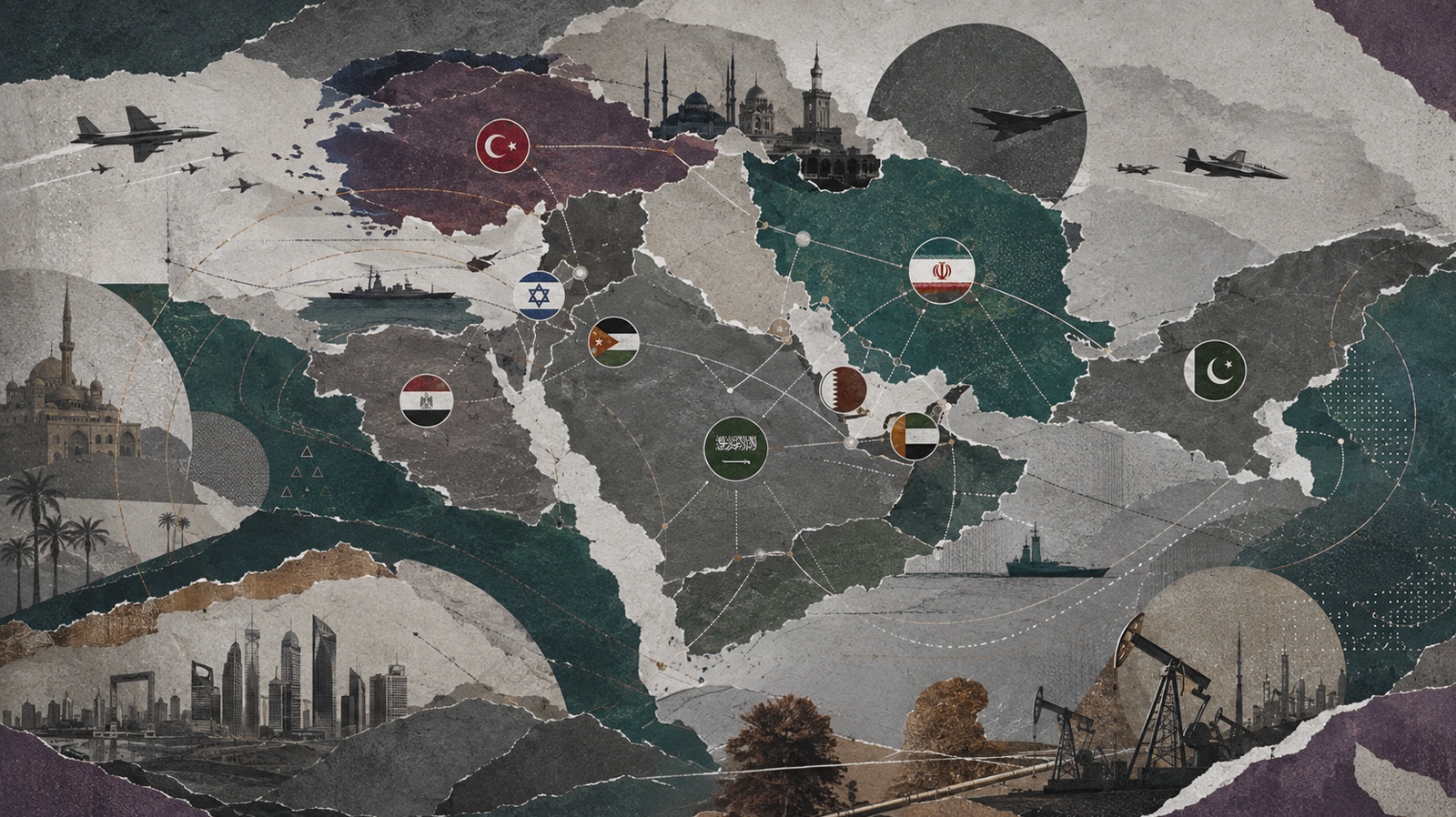
On June 21, 2026, representatives of the United States and Iran met at the Qatari-owned Bürgenstock Hotel in Switzerland, joined by senior officials from the two principal mediators, Qatar and Pakistan, to set in motion the process of implementing the memorandum of understanding between Washington and Tehran. Pakistan received most of the public credit for the understandings, but the final threads were stitched together in Doha. This points to a central, and perhaps decisive, Qatari role in bringing the parties to an agreement. Doha’s handling of the mediation, not only with Washington and Tehran but also with its mediation partners, first and foremost Pakistan, and with other regional and international actors in the Gulf and Europe, showed the sophistication and effectiveness of Qatari diplomacy. Understanding the sources of Qatari power and influence requires close attention to the mediation mechanisms, political networks, and international assets that Doha employs, and, at times, to how those mechanisms might be exploited or offset as part of a counter-policy to the Gulf state’s influence.
Pakistan
Doha’s ties with Islamabad were not limited to delegations and flights aimed at advancing the mediation effort. They also extended into the economic and strategic domains. with Qatar bringing its extensive energy relationship with Pakistan into play. Islamabad was reported to have promised gas supplies on preferential terms once regular traffic through the Strait of Hormuz resumed. At the same time, claims emerged that Qatar had managed to move some of its gas tankers through the strait through informal coordination with Iran—coordination that, according to some reports, was secured through financial transfers from Doha to Tehran. The parties involved denied these claims, but their very publication reinforced the perception that Qatar treats its economic resources as an integral part of its mediation machinery.
Economic inducements have long been part of Qatari foreign policy. In earlier mediation efforts in Africa, in which Qatar was not a direct party to the conflict, reports pointed to financial assistance and investments designed to encourage the parties to move toward agreed arrangements, as well as cash envelopes delivered to rival parties on the continent. Yet reliance on such tools also exposes Doha to criticism and pressure from regional actors. Reports of possible financial transfers to Iran, for example, angered some Gulf states and prompted official Qatari denials, as Doha sought to prevent damage to its regional standing.
Qatar also built influence with Pakistan through education and economic development. Economic initiatives, including investments by Qatari funds such as Qatar Charity, which pledged to expand its activity in Pakistan’s education system, gave Doha additional leverage. These initiatives were presented as civilian projects with no direct connection to the mediation process, but they can also be seen as part of the broader package of incentives that helped strengthen Pakistani cooperation with Qatari objectives.
Blurring Qatar’s Prominence
In earlier mediation efforts, Doha had sought the front seat. This time, because it was itself one of the countries directly affected by the regional crisis, it wanted to avoid appearing as the sole mediator. Doing so had political value. Allowing Pakistan to be seen as the lead allowed Qatar to capture the benefits of mediation while limiting the political cost. Concessions toward Iran could then be framed as the outcome of a joint process led by Pakistan, rather than as an exclusively Qatari initiative. For Doha, keeping some visible distance from direct leadership of the mediation effort helped shape the diplomatic narrative it wanted to present to its Gulf partners and to the wider international community.
The same need to manage appearances shaped Qatar’s account of when it entered the talks. Middle East Eye, a Qatari outlet, and other Qatari publications repeatedly stressed that Doha joined the negotiations that ended the crisis only in May. The point was not simply chronological. Qatar wanted to be seen as having stepped in late to prevent another slide into war, not as having thrown Iran a lifeline while the campaign was still underway. That framing shows how sensitive Doha remains to the widespread Gulf criticism that it is too close to Tehran.
That sensitivity also helps explain the significance of Bloomberg’s reporting. Bloomberg has extensive economic ties with Qatar, and its coverage is often seen as tracking Qatari messaging. It published claims that the United Arab Emirates had also assisted Iran, as Qatar allegedly had. Emirati officials were quick to point out that the report appeared to serve Qatar’s interest primarily as it gave Doha a way to deflect criticism by arguing that it was not the only Gulf state to act in this manner.
Reports in international and Israeli media alleged that Qatar had aided Iran by influencing energy markets or by using financial-transfer mechanisms. Doha responded sharply. Both the Qatari International Media Office and the Foreign Ministry spokesman issued denials, underscoring how sensitive Qatar is to any portrayal of its Iran policy as falling outside the Gulf consensus or as involving secret arrangements with Tehran at the expense of its regional partners.
Doha’s aggressive response shows how much weight it places on how it is perceived in the region. The issue is not only its international image, but its standing within the Gulf system and its relations with other Arab states. Reports that have not been fully verified may therefore still be seen in Doha as threats to its political interests, especially when amplified by influential media outlets and policymakers.
That sensitivity leaves Qatar vulnerable in the cognative arena. The more these reports circulate in the media, the more resources Doha must devote to rebutting them and promoting a competing narrative. Thus, even disputes over perception and image—rather than proven facts—can become part of a wider contest over public opinion and the frame through which Qatari foreign policy is perceived.
The point is not to determine whether such reports are true, but to assess their cognitive effect. In the modern information environment, states including Qatar, Israel, Iran, and others must contend with media campaigns, partial information, and often even disinformation. Such reports matter not only because of what they allege, but because they can affect national reputations, alter relations among states, and shape their ability to pursue political objectives regionally and internationally. Qatar’s relations with the rest of the Gulf amid these reports offered an example of this dynamic.
Doha’s connections with the Gulf states shine a light on another element of Qatari mediation, namely that it serves as the principal information channel for its Gulf neighbors when it comes to the talks. Kuwait and Saudi Arabia relied on Doha for updates when they sought assurances that their interests would be protected. Sheikh Tahnoun bin Zayed, the UAE national security adviser and brother of the Emirati president, spoke with Qatar’s prime minister during the contacts, undoubtedly out of Abu Dhabi’s concern for its own interests. When these contacts were halted in the final stretch, Emirati frustration with the agreement surfaced through unofficial Emirati influencers. The episode exposed both Qatar’s sensitivity to outside criticism and the potential to outflank it by highlighting its disagreements with neighboring states.
Switzerland
Switzerland, which hosted talks on the implementaiton of the memorandum, is another country that Qatar sought to please. The Swiss prime minister was present at the resort where the contacts took place, while Qatar’s minister for mediation affairs visited a Swiss research institute focused on mediation and peace in the days around the signing of the agreement. These moves point to the broader scope of Qatari diplomacy and illustrate how Doha worked with Switzerland to secure the conference on Swiss soil in a way that served the political interests of both countries and strengthened cooperation between them.
This outreach forms part of Qatar’s wider network of relationships with research institutions, policy institutes, and academia in the West. Doha has invested significant resources over the years in cultivating such ties, recognizing that these bodies can provide it with professional and international legitimacy, as well as platforms for advancing its policy positions.
Cooperation with Swiss research institutes therefore serves more than immediate logistical or diplomatic needs. It also strengthens Qatar’s symbolic and academic capital. Doha has previously received recognition, rankings, and awards from various research bodies that praised its work in mediation, development, and humanitarian assistance. For Qatar, this kind of recognition is a strategic asset because it gives Doha external sources of authority that it can invoke in the face of international criticism.
Qatar’s relationships with research institutions are not a secondary feature of its foreign policy. They are part of a broader effort to establish Doha’s image as a responsible mediator that makes a positive contribution to the international system. That image helps Qatar answer political criticism and build support ahead of future mediation initiatives in which it seeks a leading role.
The Content of the Mediation
The financial issue highlights another aspect of Qatar’s conduct—its ability to offer economic returns as part of it diplomatic activity. Some of the understandings reached in the talks included the creation of a fund of roughly $300 billion for investment in the Iranian economy. This clause drew criticism in the United States from those who argued that Washington was in effect paying Iran. American officials responded by stressing that the money was not American and that not a cent from the U.S. budget would be transferred to Iran. The plan was instead presented as an initiative by Gulf states interested in investing in the Iranian economy, with President Trump arguing that he did not intend to prevent U.S. allies from making independent investment decisions.
For Doha, the proposed formula had several advantages. Firstly, it placed economic inducements at the service of political mediation—a familiar Qatari method. During the Biden administration, Qatar played a significant role in the arrangement for transferring $6 billion in frozen Iranian funds held in Qatari bank accounts under American supervision. That precedent, together with the current initiatives, reinforced Qatar’s value as a financial intermediary that neither side can easily bypass.
Qatar was also embedded in the mechanics of the talks. According to reports, the American and Iranian teams operated through dedicated working groups, with Qatari and Pakistani representatives included as part of the mediation mechanism. Doha was therefore not merely relaying messages; it was helping shape the practical options on the table. This was evident in the late June–early July round of talks in Doha, where, according to official statements, the American and Iranian representatives did not meet directly, rather, each side met separately with the Qataris, on different days.
Qatar also understood how politically sensitive any arrangement that could be seen as a direct transfer of funds to Iran would be in the United States. It therefore framed its proposals in terms that allowed Washington to present the arrangement as an economic and investment initiative, rather than as political support for Tehran. Reports also indicated that some of the funds to be transferred would be defined as humanitarian assistance. This fits Qatar’s broader strategy of branding financial transfers as responses to humanitarian or economic needs, thereby reducing international criticism of their political significance.
For Iran, freeing up funds was a core issue. A Qatari breakthrough on that front strengthened Doha’s standing in Tehran as a mediator capable of producing concrete results. At the same time it enabled Qatar to show Washington its contribution to the talks and highlight its efficiency as a mediator able to bridge the parties’ needs and bring about practical understandings.
Integrating Qatar’s Private Sector
These Qatari economic interests reveal how Doha often blurs the line between the public and private sectors in its foreign policy. Syria after the fall of the Assad regime is illustrative of Doha’s maneuvers. Qatar relied on private or semi-private companies with close ties to the Qatari establishment to advance projects with political significance. According to various reports, companies linked to the business conglomerate of the Qatari-Syrian Al-Khayyat family were involved in reconstruction and infrastructure projects, including at Damascus International Airport. These projects were presented publicly as humanitarian and economic initiatives, but in practice they gave Qatar a significant foothold in shaping Syria’s new political order.
Semi-private companies gave Doha room to maneuver. They allowed Qatar to operate more flexibly than is possible for formal state institutions, while reducing its exposure to direct international criticism. They also enabled Qatar to influence reconstruction and development processes without appearing to intervene directly in the internal affairs of the country in which it was operating.
This model also allowed Qatar to serve as a bridge for Western actors seeking access to an emerging economic space. U.S. envoy to Syria Tom Barrack, for example, was able to use the channels Doha had built to promote the involvement of American companies in reconstruction and investment in the country, with Qatar acting as mediator and conduit between the new regime and international business actors. The Al-Khayyat family’s Qatari businesses were used as a vehicle to bring in in American businesses with the blessing of Trump’s envoy.
This modus operandi is not limited to Syria. In several cases, business initiatives by Qatari entrepreneurs have reportedly overlapped with broader political interests. Reports of Jared Kushner’s and Steve Witkoff’s growing involvement in regional ventures were accompanied by accounts of business cooperation with Qatari figures tied to the establishment in Doha. The Al-Khayyat family was reportedly among the financiers of Kushner’s planned Sazan Island project in Albania. Those reports appeared amid the Iran negotiations in which Kushner was also involved in coordination with Qatar. Whether the links were direct or indirect, they showed how Qatar at times combines private capital, business ties, and political influence.
The same model could give Qatar a central role in the large-scale investment plans discussed for Iran. Doha could lead investment through private or semi-private companies operating in line with government policy, giving it a place in development and economic-recovery processes of strategic importance to Tehran. An Axios report from the latest round of contacts reinforced this point. According to the report, American mediators reportedly urged the Iranians to “think big” about profits from oil revenues and additional commercial permissions Washington would grant, hoping to persuade Tehran to forgo more immediate gains from taxing passage through Hormuz.
For Iran, such an arrangement could deliver investment and infrastructure development without creating direct dependence on the United States. For Washington, it could bring American business interests into the process through private companies and international investors. Each side would have something to present to its own audience. Iran would receive capital and economic recovery; Qatar would strengthen its position as a mediator and regional economic hub; and the U.S. administration could point to new economic opportunities for American actors without direct government involvement.
Creating Value for Both Sides
Presenting Qatar as an effective mediator that could help the United States transmit messages and secure understandings also served Washington’s purposes. According to various reports, senior U.S. administration officials saw value in strengthening Doha’s position and giving it relatively broad diplomatic room to maneuver, because its mediation role depended on the trust it enjoyed with both sides.
That latitude allowed Doha to present Iran with concessions and proposals that could be credited to its mediation, strengthening its image as a player with real influence over the process. Tehran, for its part, also benefited from maintain Qatar’s status as an effective mediator and was therefore willing to give Doha some flexibility. Both Washington and Tehran thus had some interest in Qatar success in the role.
Qatar used this balance to maneuver in the diplomatic space between the parties while protecting its political assets with each of them. It reduced the risk of damage to its ties with Washington or Tehran, and at the same time strengthened its status as an indispensable mediator whose continued involvement both sides came to see as useful.
Vice President Vance’s explanation for withholding the full details of the agreement captured this delicate arrangement. He said the United States had left the public presentation to Qatar and Pakistan because both countries understood the region’s political, Arab, and Islamic sensitivities and knew how to frame the agreement in a way that would make it easier for Middle Eastern states to accept. His comments reflected a broader tendency in the administration to treat Qatar as a preferred partner for regional mediation. Former U.S. Ambassador Tim Davis made the same point when he described Qatar as Washington’s default mediator in the Middle East and North Africa. This perception encapsulates the role Doha has cultivated in Washington—a state that can solve crises, open channels to actors the United States struggles to engage directly and execute diplomatic moves Washington cannot easily undertake on its own.
Qatar’s ties with Islamist and non-state actors make that role especially valuable to Washington. They allow Doha to transmit messages, test positions, and mediate between hostile parties without requiring direct U.S. contact. During the war, Qatar applied this in Lebanon as well. It repeatedly raised the Lebanese issue during the negotiations and tied it to the discussion between Tehran-Washington, in line with Iran’s desire to project authority over Lebanon. This ran counter to Israel’s effort, coordinated with Secretary of State Marco Rubio, to separate the arenas and pursue an agreement free of Iranian influence. In view of the importance of the Lebanese front and need to transmit messages to actors close to Hezbollah, Qatar drew on its network in Lebanon, including Lebanese Parliament Speaker Nabih Berri and other political figures with ties to the organization. These channels allowed Qatar to pass messages on behalf of the United States and helped fold Lebanon into the broader understandings under discussion. For Iran, this ensured attention to the interests of its regional allies and further strengthened Qatar’s standing as a mediator able to address the needs of all the actors involved.
Qatar was able to use the mediation to placate actors across the geopolitical arena, keeping itself indispensable to all sides, extracting different benefits from each and insisting on mechanisms that would keep Doha at the center in any future developments. Yet this maneuvering created vulnerabilities. Actors that believed the arrangements harmed their interests, especially the United Arab Emirates, had openings to pressure Qatar. That points to a possible way to counter Qatari mediation, which poses a danger to Israel.
JISS Policy Papers are published through the generosity of the Greg Rosshandler Family.