

The upheaval that has swept the Arab world since the beginning of 2011 has reshaped the entire region, whose fault lines, patterns of cooperation, and configurations of power can be understood as a struggle among camps with distinct ideological identities. With the collapse of the secular Arab nationalist-socialist camp and the weakness of the liberal-democratic camp, four principal camps emerged and, to a large extent, remain in place. Three represent variants of revolutionary political Islamism: ISIS and similar groups; the Muslim Brotherhood and its supporters, led by Erdoğan’s Turkey; and the regime in Iran and its proxies. Opposing them is a coalition of forces hostile to revolution—the “camp of stability”—in which Israel plays an important role. The 2020 Abraham Accords brought the components and motives of this partnership largely into the open, while Israel’s transfer to the area of responsibility of the United States Central Command (CENTCOM) reflected a de-facto recognition of the partnership by the United States.[1]
The events of recent years—particularly the multi-front war Israel has been fighting since October 2023 and its offshoots—have again demonstrated the importance and utility of the ideological “game of camps” as a superior analytical tool for understanding the broader picture, compared with the traditional tools of political realism. The basic map remains basically intact, but significant changes have occurred both in the balance of power between the camps and in their internal dynamics. These shifts are especially evident in tensions among the states of the camp of stability themselves, where economic constraints, developments in the global system, and above all Trump era U.S. policy play a central role.
Saudi Arabia’s decision to throw its lot in with Pakistan and Turkey—and therefore also with Qatar, until not long ago its bitter rival—illustrate both the rifts among the states of the camp of stability and their search for alternative anchors. A deep erosion of Saudi—and broader—confidence in the degree of U.S. commitment under Trump to defending its traditional allies in the region lies at the heart of this development.
In broad terms, these changes in the game of camps can be characterized as follows, in ascending order of importance:
- The Salafi-jihadist camp, centered on the Islamic State (ISIS), suffered defeats in the principal theaters of fighting during the previous decade and was pushed to the margins of the Arab world. In the Sahel and elsewhere in Africa, however, its power is rising. The U.S. withdrawal from Afghanistan left military materiel and advanced weapons in the hands of the Taliban regime, giving it strategic leverage. The Taliban’s control of the waters of the Helmand River, which are vital to the stability of the volatile Sistan-Baluchistan Province, and the Harirud River, which supplies Khorasan Province and the city of Mashhad, creates an acute strategic vulnerability for Iran and confronts Pakistan with an unexpected threat on its western border.
- Cracks have emerged in the camp of stability, reflecting both conflicting interests among its principal actors and the strain on historically tense relations with Israel caused by the war in Gaza and Lebanon. In several conflict arenas, including Yemen, Sudan, Somalia/Somaliland, and Libya, some of these actors find themselves on opposing sides. Above all, the loss of confidence in the U.S. is pushing Saudi Arabia toward partnerships with Pakistan and Turkey. Nevertheless, as the campaign against Iran and its proxies, particularly the Houthis, expands, there are signs that partnerships that had previously frayed may be renewed, especially the partnership between Saudi Arabia and the United Arab Emirates, which has maintained its deep strategic relationship with Israel intact throughout this period. Egypt has followed a similar course, strengthening ties with Ankara and Beijing, signing bilateral agreements and making extensive arms purchases from them.
- The camp identified with the worldview of the Muslim Brotherhood, led by Erdoğan’s Turkey, with Qatar as both as a strategic partner and as an actor with global influence through its use of economic and cognitive levers in the West. The weakening of the Hamas regime in Gaza, which clearly belongs to this camp, has dealt it a severe blow. At the same time, however, the camp has gained strength—worryingly from an Israeli perspective—for five principal reasons:
- The defeat of Assad’s regime in Syria in December 2024, which effectively shifted a highly important strategic asset from the Iranian sphere of influence to that of Erdoğan;
- The exploitation of the above-mentioned fissures in the camp of stability: vis-à-vis both Saudi Arabia and Egypt, despite ideological strains, conditions emerged that enabled Turkey to deepen its, reflected, inter alia, in military and economic cooperation in Africa;
- The U.S. administration, attaches great importance to Turkey’s role— even though it continues to block the F-35 deal with Ankara—, and has given three of the states in this camp political standing in the talks that led to the ceasefire in Gaza;
- Pakistan’s growing involvement as an important partner in this camp—and as a nuclear power, with all the implications that entails—as reflected, among other things, in the leading role it played alongside Qatar in mediation efforts between the U.S. and Iran;
- The expanding Egyptian-Turkish influence over Somalia in the Horn of Africa, the construction of a space-launch base, and the deployment of about 10,000 Egyptian soldiers there.
- The defeat of Assad’s regime in Syria in December 2024, which effectively shifted a highly important strategic asset from the Iranian sphere of influence to that of Erdoğan;
- Taking a long-term perspective, the expansion of Turkish influence is the major challenge to Israel’s future, however. the defining trend in the game of camps over the past three years has been the fluctuating power and status of the Iranian camp. Iran and its strategic assets, including the proxy network that served it reliably for decades, have suffered severe damage: the Syrian regime collapsed; Hezbollah was hit hard, and the Lebanese government supports, (at least in principle) the organization’s disarmament; and the Houthis—even as they continue to display militant zeal—have sustained blows, face an Israeli presence in their immediate vicinity, and are now also confronting a renewed Saudi campaign against them. Nevertheless, if the Revolutionary Guards regime in Tehran not only survives but succeeds in presenting the war’s outcome as a historic victory, framed in religious terms as Shiite “redemption” through suffering, the effect on the regional balance of power could be extremely dangerous given the implications of economic control over the global oil market. Conversely, if the campaign brings down the regime or produces an arrangement consistent with the fundamental demands of the U.S. and Israel, it will consolidate the camp of stability’s position and renew ties among the states belong to that camp, regardless of trends that may emerge in the Palestinian arena.
ISIS and Similar Groups—On the Margins of the Regional System
In the mid-2010s, the extremist Sunni jihadist-Salafi camp, which began with al-Qaeda and continued with the “Islamic State in Iraq and the Levant,” ISIS/ISIL, still threatened to cast its shadow over the entire region and rank among the forces competing for hegemony and the power to shape the Arab world. Within a few years, however, its strongholds in northeastern Iraq and northern Syria were eliminated, along with its leaders, and all territory held by the “state” was retaken. In the Sinai Peninsula, Egyptian security forces gradually crushed the terrorist elements that had sworn allegiance to ISIS’s purported caliphate and formed “Sinai Province” (Wilayat Sinai), largely neutralizing their ability to carry out mass-casualty attacks.
Nevertheless, residual ISIS elements still exist in these areas, and the organization retains a virtual presence on social media and among Muslim audiences in the West. Its propaganda draws on the war and on claims that Arab regimes are cooperating with the United States and Israel. In addition, groups directly identified with ISIS—such as Nigeria’s Boko Haram, which also swore allegiance to the “caliphate”—as well as groups associated with the ideas of other extremist Islamist movements are highly active in the Sahel, the belt south of Arab North Africa, and farther south in parts of East Africa, including Mozambique, as well as in Nigeria. ISIS has also carried out attacks in Afghanistan as a measure against of what is perceived as an arrangement governing relations between the Taliban regime and the West.
The place of jihadist elements within the new Syrian regime remains an open question, particularly concerning veterans of Jabhat al-Nusra, which split from al-Qaeda, and even individuals clearly identified with ISIS, whose presence was evident in the massacres of Druze in the Sweida area in 2025. The Syrian leader Ahmad al-Sharaaseeks to present himself as a figure who can do business with the West. The Trump administration lifted sanctions against Syria, and his strategic affiliations and ideas appear oriented toward Erdoğan’s Turkey rather than a more extremist camp. His control over Syria remains tenuous, however, and the more extremist elements in his immediate surroundings warrant monitoring for both their positions and their actions.
Cracks and Shifts in Orientation in the Camp of Stability
The picture is now more complex than it appeared at the beginning of the current decade. At that point, three states in the camp of stability—the United Arab Emirates, Bahrain, and Morocco—had openly established full relations with Israel. Sudan, which also signed the Accords, collapsed as a state, rendering its signature devoid of practical significance. There were also signs of active engagement with Saudi Arabia, including visits by senior officials and the involvement of Israeli companies in Mohammed bin Salman’s mega-projects. The picture has since become far more complex in the wake of the war , which weighed on relations and, above all, blocked prospects for further progress with the Saudis. Public attitudes turned hostile in several of the countries of the camp of stability, including even Morocco (and indeed in the West).
Nevertheless, with regard to security cooperation , relations proved resilient with all three of the Abraham Accords countries and other countries in the camp of stability. Air-defense and missile-interception forces from Arab states belonging to the camp, including Jordan, took part in thwarting Iranian and Houthi attacks on Israel. Israel, for its part, moved forward with far-reaching deals with Morocco and, according to verified reports, deployed missile-interception capabilities to defend the Emirates. Cooperation with Arab states has reached unprecedented levels. According to reports, the IDF and the Egyptian Air Force even operated in the same theater against the Iranian threat.
The principal, and more complex difficulty is that key states in the camp of stability, each acting according to its own interests, including economic interests—as illustrated by the United Arab Emirates’ withdrawal from OPEC—have come close to open friction with one another in several theaters. This has made it harder to coordinate joint strategies against the Iranian and Turkish challenges. Thus, despite the ideological affinity between their regimes, Egypt and the United Arab Emirates have supported opposing sides in the murderous civil war that has raged in Sudan in recent years.
Egypt and others in the camp of stability are uneasy about Emirati support for the Israeli presence in Somaliland. On the critical question of how to conduct the campaign to topple the Houthi regime in Yemen, the Saudis backed the “legitimate” government while the Emiratis supported the rebel forces in southern Yemen. Tensions also arose over the nature of the response to the U.S. campaign against Iran. Nevertheless, signs of renewed rapprochement between Riyadh and Abu Dhabi over Yemen have recently emerged in light of the scale of Iranian aggression.
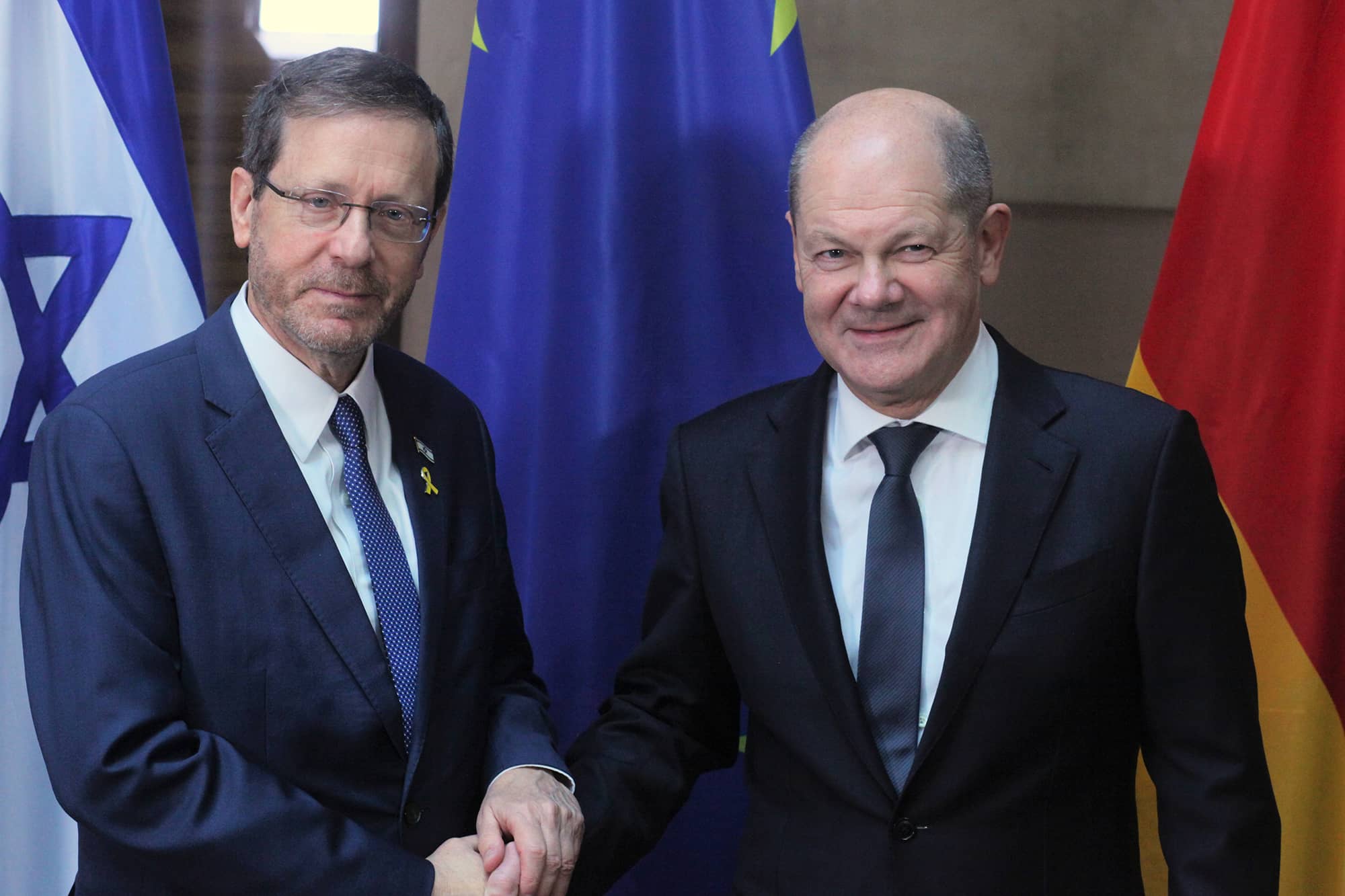
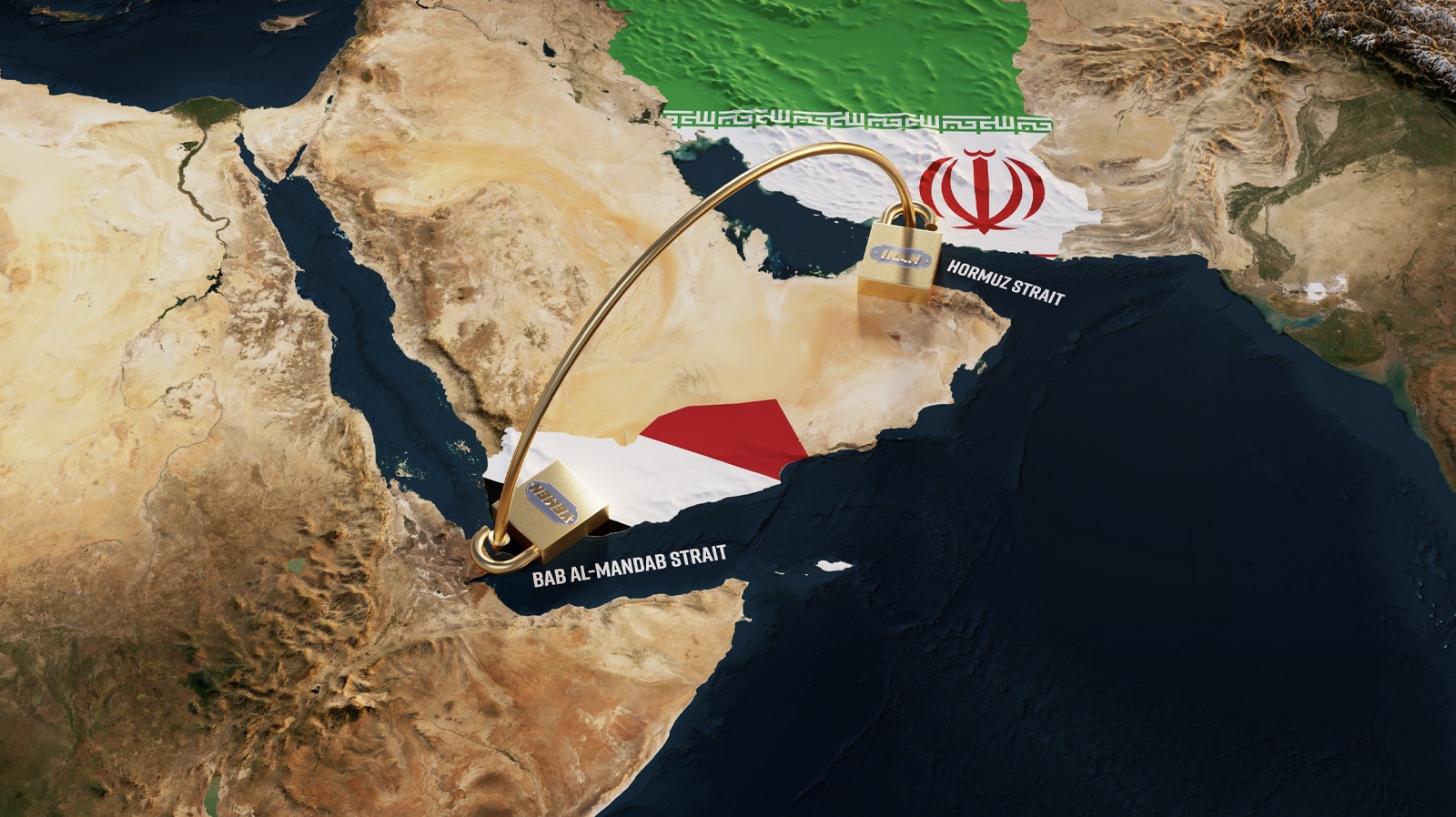
It remains too early to assess whether the Saudi decision to renew fighting against the Houthis, together with their counter-threats regarding Bab al-Mandab, could herald a closing of ranks in the camp of stability with US backing and whether it will create opportunities for expanded cooperation with Israel, sees freedom of navigation through the strait and the Red Sea as a vital interest. Jerusalem’s dialogue with Bahrain, including the recent conversation between President Isaac Herzog and King Hamad bin Isa Al Khalifa, publicized at the latter’s initiative, illustrates the potential for cooperation as the Bahraini monarchy, because of its location and constraints, including Sunni rule over a Shiite majority, operates in close coordination with Saudi Arabia. Despite the Mecca Pact , the potential to rehabilitate the camp of stability remains intact, with India to the east and the Hellenic states in the Mediterranean to the west serving as external strategic anchors for this alignment, with active Israeli involvement.
Is Erdoğan Leading Turkey to a Clash with the Camp of Stability?
At first glance, the Muslim Brotherhood camp and its supporters suffered a blow in 2013, when Mohamed Morsi was removed from the Egyptian presidency and the military, headed by Abdel Fattah el-Sisi, seized power, which it retains to this day. The erosion of Hamas’s power in Gaza since October 7, 2023, has compounded that setback. Libya presents a more mixed picture. During intense fighting in 2019, Egypt and Turkey appeared close to direct military confrontation as they backed opposing sides. Today, the Muslim Brotherhood carries weight in the government of western Libya, Tripolitania, while U.S.-backed efforts toward a settlement have resulted, de facto, in full power-sharing with “Field Marshal” Khalifa Haftar, Sisi’s protégé, who effectively controls Cyrenaica and its capital, Benghazi, in the east through the absurdly misnamed “Libyan National Army.”
Turkey’s expansion in the Horn of Africa under Erdoğan’s leadership puts Ankara on a collision course with the vital interests of the states of the camp of stability in Somaliland. The Somali arena appears likely to become the next focal point in the struggle between the rival camps, as its strategically important location draws the attention of regional powers seeking to expand their spheres of influence.
From a broader perspective, this camp has made a series of strategic gains under the aggressive leadership of Turkish President Recep Tayyip Erdoğan and his right-hand man, Foreign Minister Hakan Fidan that, in the long term, may affect the regional balance of power:
- The dramatic fall of the Syrian regime in December 2024 played first and foremost into Turkish hands. The rebels had long operated under Turkish sponsorship in the Idlib enclave, with Turkish forces defending its approaches and Bashar Assad unable to Regain his hold on the province. Ahmad al-Sharaa, as noted above, regards himself as indebted to his benefactors. Israel’s position plays a role in restraining Turkish military involvement in Syria. In the north, however, especially in the Afrin district, which has largely been cleared of its Kurdish residents, Turkey’s hold is steadily tightening. Erdoğan is clearly seeking to extend his reach in Lebanon as well amid the new order taking shape there.
- The Gulf states, first and foremost Saudi Arabia, have changed their approach to Erdoğan and responded to his overtures. Until recently, Saudi Arabia viewed Qatar as an enemy to be blockaded because of its stance toward the Muslim Brotherhood and its alignment with Turkish ambitions. Doubts about the long-term reliability of U.S. backing appear to have played a role in this reassessment of relations with Ankara. Egypt has moved in the same direction. A decade ago, it stood on the verge of severing relations with Turkey, when Erdoğan called Sisi a “usurper of power,” and, as noted, it was not far from a military confrontation with Turkey in Libya in 2019. Today Egypt maintains political, economic, and even military contacts with Turkey, although beneath the surface it still does not want a Turkish military presence in Gaza.
- Politically, Erdoğan also enjoys an exceptional relationship with the Trump administration and with the president personally. Trump’s close associate Tom Barrack serves as ambassador in Ankara and leads U.S. policy in Syria. Whereas the Biden administration did not regard Turkey as a democracy, Trump is far less concerned by Ankara’s authoritarian rule. He also granted Turkey and Qatar an active role in major regional moves, foremost among them the arrangement that led to the ceasefire in Gaza and the release of the hostages.
- Pakistan’s entry into regional balance-of-power calculations and its closer ties with both Turkey and Saudi Arabia have significantly bolstered the power and influence of the Turkish-Qatari axis and helped give rise to what is sometimes called, with some exaggeration, a “Sunni NATO alliance.” The implications are amplified by Pakistan’s status as a declared nuclear power. That status was on public display during the armed confrontation between Islamabad and New Delhi in May 2025, when Ankara stood alongside its partner while supplying advanced domestically produced combat systems that took an active part in the campaign.
- Turkey is also building infrastructure in the Horn of Africa to support satellite launches and perhaps even ballistic-missile capabilities. The project was officially revealed in late 2025, when Turkish leader Recep Tayyip Erdoğan and his Somali counterpart, Hassan Sheikh Mohamud, signed an agreement on scientific and technological cooperation. This marks the transformation of what began as a humanitarian aid effort in 2011 into a major strategic foothold for Ankara in this critical location. Turkish efforts to establish footholds in Africa also extend to Libya and Sudan, among other places.
The Mecca Pact signed in Saudi Arabia gives concrete form to the ambitions of Erdoğan and Hakan Fidan through the Ankara-Islamabad-Riyadh cooperation document. It draws on Article 5 in the NATO memorandum, under which an attack on any state party to the agreement would be considered an attack on all and require a response by all. Although the Turks emphasized that this commitment is intended as a defensive deterrent, it strengthens the standing of Pact’s members in the Middle East. The agreement’s ultimate significance nevertheless remains to be seen.
Iran and Its Proxies Face the Ultimate Test
Turkey, Qatar, and Pakistan may, for all the reasons noted above, pose a major strategic challenge to Israel’s power and regional status in the future. In the context of the war, however, the Iranian camp remains Jerusalem’s principal adversary. The outcome of the current campaign will largely determine near-term trends in the game of camps.
Since October 2023, Iran and its proxies have suffered a series of heavy blows that have shattered the “ring of fire” Iran sought to create around Israel and significantly weakened the power of the Tehran camp:
- First and foremost, Iran itself came under successive rounds of strikes: by Israel, joined on the final day of Operation Rising Lion in June 2025, by the United States in June 2025; by the U.S. and Israel in unprecedented operational coordination from late February to early April 2026 (Operation Roaring Lion/Epic Fury); and by the U.S., with occasional assistance from Gulf states, in July 2026. These strikes damaged Iran’s nuclear infrastructure, its military power—including production capabilities supporting its missile array, air defense, and air and naval forces—and key civilian infrastructure. The country’s previous leadership was decapitated, and Iran is now, for all intents and purposes ruled by the Revolutionary Guards. It has been placed under blockade, and its economy is steadily deteriorating, as reflected, among other things, in the exchange rate of the Rial. Iran did receive occasional intelligence and military assistance from Russia and China, but its partners in the CRINK axis refrained from crossing the threshold that would lead to an escalation of the confrontation with a U.S. administration whose reactions are difficult to predict.
- Beginning in autumn 2024, Israel dealt a series of severe blows to Hezbollah, Iran’s most important and best-armed proxy. Its leadership was eliminated, thousands of its members were killed or wounded, and it was unable to prevent an Israeli takeover of parts of southern Lebanon or the destruction of the military and civilian infrastructure on which the organization’s presence relied. Politically, moreover, the Lebanese government, in close contact with Washington, is working to advance Hezbollah’s disarmament—or at least to declare its desire to do so. The very willingness to take such a position and translate it into an overt agreement with Israel attests to the organization’s weakness.
- The fall of the Assad regime in Syria brought down another central pillar of the Iranian camp and significantly impaired Iran’s ability to increase pressure on Israel and maintain an open supply route to Lebanon.
- In Yemen, the Houthis demonstrated an ability both to operate directly against Israel and to close the trade route through the Bab al-Mandab Straits, but they too were struck, first by the United States and its allies in a round of fighting that ended inconclusively, and later by Israel. After years of respite, they are once again under attack by Saudi Arabia and by the legitimate government in what remains of Yemen. They must also now reckon with Israel’s strategic presence in Somaliland, in their immediate geopolitical vicinity.
- While Hamas is not, in fact, a “proxy” of Iran(its junior partner in Gaza, Palestinian Islamic Jihad, does fit that definition) it nevertheless became an important partner in the effort to encircle Israel, and the blows it has suffered since October 2023 have further reduced Iran’s ability to lay siege to Israel and control the regional agenda.
- In Iraq, the pro-Iranian Shiite militias proved unable to pose a significant challenge to the U.S. or Israel, while the current government in Baghdad is moving toward improved relations with Washington.
Despite all this, the Shiite camp would be greatly strengthened if the regime in Tehran succeeds in bringing the U.S. to end the campaign on terms Iran could present as a historic victory, using a combination of closing the Strait of Hormuz and firing without restraint at almost all of its Arab neighbors. The severe blows to Iran and its leadership would then be recast as validating the Shiite conception of history, in which martyrdom is a prelude to future redemption. This would have far-reaching effects on the regional balance of power.
“Swing States” in the Game of Camps
The internal dynamics of the camps and movement between the various blocs reveal stable core states alongside “swing” actors whose moves reshape the map of regional influence:
Saudi Arabia, which relies heavily on modern equipment and extensive support from Washington, maintains informal channels with Jerusalem, found itself in late 2025 facing serious friction with Abu Dhabi over the Yemeni arena, centered on a categorical demand for the withdrawal of the Emirati presence from Hadramawt Province. After a cooling-off period, the partnership between the two countries appears to have returned to its previous course. At the same time, Riyadh’s willingness to deepen ties with states identified with the “Muslim Brotherhood” camp cements its position as a middle player seeking to maximize gains in every direction. The recent signing in Mecca of a joint memorandum with Turkey and Pakistan has reinforced that position and deepened distrust of the kingdom within the camp of stability. Moreover, the vision of the “India-Middle East-Europe Economic Corridor” (IMEC), in which Saudi Arabia is a strategic link, directly conflicts with the interests of Pakistan and Turkey, its senior partners. Because the corridor is intended to pass through Israel, Riyadh faces an increasingly complex decision over normalization, while the manner in which the logistics project is implemented will have decisive implications for the fate of the game of camps and Saudi Arabia’s place within it.
Egypt is a strategic pillar of the camp of stability and is linked to Israel by extensive security, economic, and energy ties, including liquefaction infrastructure for Israeli natural gas. In recent years, however, Cairo has chosen to deepen its partnerships with Ankara and Beijing. This trend emerged after Egypt and Turkey stood on the brink of a military clash in 2019 and now extends beyond the bilateral relationship into the African arena, as reflected in their joint involvement in Sudan and Somalia and in the deployment of Turkish aircraft in southern Somalia. The establishment of the High-Level Strategic Cooperation Council between Turkey and Egypt in 2024 represents a dangerous step forward in military relations between the two powers. Although Cairo’s status as a recipient of extensive U.S. military and economic assistance serves as a restraining factor, severe domestic constraints, especially the employment and energy crisis, and public attitudes hostile to Israel continue to push it toward the rival camp.
Lebanon effectively ceased to function as a state over the years as a result of Hezbollah’s violent takeover of the south of the country and large areas of the Bekaa and Dahieh. Israel’s continued fighting against Hezbollah and the dismantling of its rule culminated in the killing of Nasrallah. The blow to Hezbollah’s power opened a rare political window for agreements between Israel and the Lebanese government under U.S. mediation. The significance of this move lies in Lebanon’s shift to the camp of stability and in the resulting strengthening of that camp because of Lebanon’s proximity to Turkey. Nevertheless, Hezbollah remains a player in Lebanon and retains enormous power; it is doubtful that moves toward normalization or other arrangements under discussion can be fully realized unless the organization is meaningfully and durably displaced from the Lebanese political and military arenas.
Given the state of play in the region, its various actors can be seen coalescing around the shared ideological denominators reviewed at the beginning of this article. Although the road to final consolidation of the camp of stability remains long, several developments may turn scenarios previously considered unlikely into tangible strategic realities: the growing threat from the Muslim Brotherhood axis led by Turkey and its reinforcement through the Mecca Pact; the survival of the Revolutionary Guards regime in Tehran, which continues to inspire fear among the states of the region, particularly the Gulf states; and the political dynamics in Syria and Afghanistan.
[1] Position Paper 326 (Ramat Gan: Begin-Sadat Center for Strategic Studies, Bar-Ilan University, January 2016), https://besacenter.org/wp-content/uploads/2016/01/LermanEran-NewPermutationsinMideast-PP326HEBREW.pdf
JISS Policy Papers are published through the generosity of the Greg Rosshandler Family.
Source: https://jiss.org.il/en/lerman-briggs-mapping-the-middle-easts-game-of-camps/